
Select Languages:

By Rodney Chatman, AICP, Planning Division Manager, Forward Pinellas
In Pinellas County, construction activity seems to never end, with new apartment buildings, self-serve car washes, and shopping centers rising from old parking lots—and yet, recent data suggests the county isn’t actually growing. Over the past five years, Pinellas County has added thousands of new housing units—but not people. According to the University of Florida’s Bureau of Economic and Business Research (BEBR), the county’s population stood at approximately 967,000 in April 2025, a slight increase from roughly 959,107 residents in 2020.1 During that same period, the housing stock grew by more than 16,000 units, with nearly all the increase concentrated in multifamily construction.2
This paradox—rising unit production alongside stagnant or declining population—underscores a structural shift in how growth manifests in a built-out, mature county like Pinellas. The county isn’t expanding outward; it’s turning over inward.
Between 2020 and 2025, the total number of housing units in Pinellas County rose from about 474,730 to 494,687, an increase of roughly 4.2%. The multifamily sector led this trend, growing by 9.8% and adding more than 16,000 new apartments or condos. Meanwhile, single-family homes remained essentially unchanged (+0.2%), and manufactured homes declined by 2.1%.2
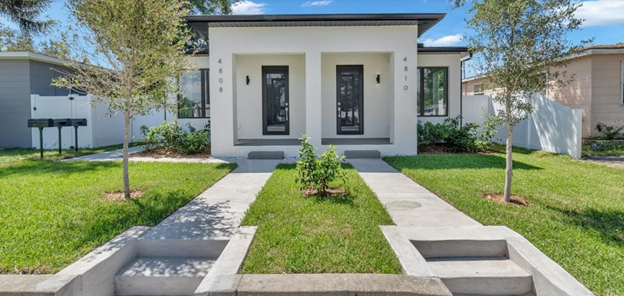
In a county with limited developable land, this pattern points to a redevelopment-driven housing cycle. New multifamily projects are typically replacing aging structures or filling underutilized commercial sites—adding density but not necessarily population.
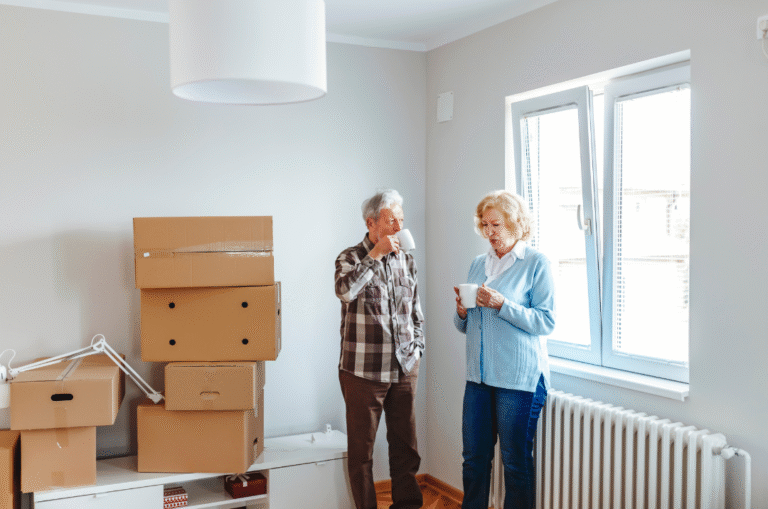
The data suggest a deeper demographic dynamic at play. Average household size in Pinellas County has been trending downward for years as empty nesters, retirees, and smaller households increasingly dominate the housing market. With an aging population and fewer families with children, new units often house fewer people than those they replace.
This “growth without growth” phenomenon reflects broader national trends but hits especially hard in coastal, land-constrained counties. As household sizes shrink, more housing is needed to serve the same or even fewer residents. That reality strains infrastructure planning, affordability goals, and assumptions about growth management.
From an economic perspective, a stable or declining population amid rising housing production changes the calculus for local governments and developers alike.
Housing Affordability: A shift toward higher-cost multifamily construction may not ease affordability pressures if the added units target higher-income renters or seasonal residents rather than full-time workers.
Redevelopment Economics: Replacing older housing stock improves quality and resilience but often reduces naturally occurring affordable housing, displacing lower-income households.
Infrastructure and Services: Slower population growth can make it harder to justify new capital investments or sustain the tax base needed for maintenance and upgrades, particularly in aging communities.
Pinellas County’s experience challenges planners to redefine success beyond simple population or unit counts. In a county that is nearly built out, “growth” increasingly means adapting—modernizing housing stock, rebalancing land use, and supporting demographic shifts without assuming perpetual expansion.
Planners and policymakers may need to focus less on adding people or homes and more on aligning housing types, affordability, and infrastructure with the county’s evolving demographics. The next decade of growth in Pinellas will be measured less by how much is built—and more by how well what’s built serves those who call the county home.
To thrive in this new planning reality, Pinellas County and its municipalities could pursue policies that make redevelopment more viable. Policies in the Countywide Plan encourage missing-middle housing, offer incentives for adaptive reuse, and support staying part of your neighborhood and community as you age. Local governments should strongly consider adopting these strategies and also consider revisiting zoning codes to allow smaller, more flexible units that fit emerging household types, and explore ways to balance tourism with neighborhood stability needs consistent with state law requirements. Together, these approaches can ensure that the county’s housing production not only keeps pace with economic shifts—but also reinforces the county’s long-term economic resilience and quality of life goals.
References:
1 Source: Bureau of Economic and Business Research (BEBR), University of Florida. “County Population and Components of Change, April 1, 2025.”
2 Source: Pinellas County Property Appraiser’s Office, “Housing Units by Type, 2020–2025.” Compiled data provided October 2025.
For questions/comments, please contact Rodney Chatman at rschatman@forwardpinellas.org or 727-464-5679.
Note: This search only includes current posts.
To access blog content from 2022 and older, please visit: The Archive.